JillLebofsky may earn a commission if you buy through links on this page, at no extra cost to you. That does not change what we report.
Part of our Synaptigen overview. Last checked November 6, 2026.
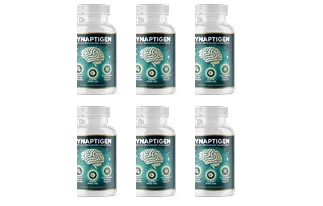
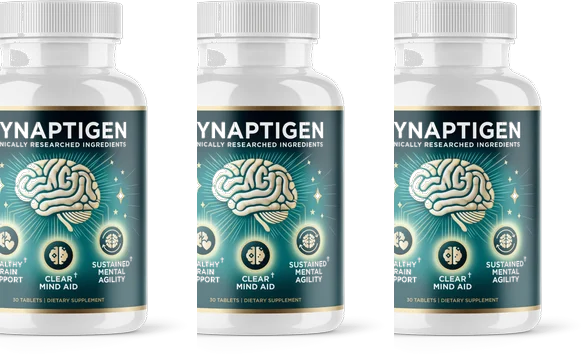
Does Synaptigen work for memory? Nothing we found shows that it does. The vendor sells it as a brain formula, yet its own label lists 140 mg of actives per chewable tablet: 100 mg of chicory inulin, a 20 mg probiotic blend and 20 mg of Streptococcus salivarius[2]. Those are oral and gut ingredients, and the trials behind them measured gums and teeth.
We checked the label, the sales page and the vendor's References page on November 6, 2026, using the method on our how we check products page.
Does Synaptigen work? The short answer
There is no good reason to expect Synaptigen to improve memory. No ingredient on the label has solid human evidence for memory at these doses, and the vendor names no study of the tablet itself.
The vendor says the formula "works by clearing sugar buildup from neurons, thereby supporting brain cell communication"[1]. The label does not match that story. It reads like an oral probiotic chewable: inulin, Lactobacillus paracasei, Lactobacillus reuteri, Bifidobacterium lactis BL-04 and S. salivarius, flavored with strawberry and peppermint oil[2].
What can be concluded: the product is a small probiotic and fiber tablet with a stated 3.5 billion CFU at the time of manufacture. What cannot be concluded: that it changes memory, focus or "sugar buildup" in the brain. For the full breakdown of each component, see our Synaptigen ingredients guide.
Which evidence levels should you not confuse?
Four kinds of evidence often get blended on supplement pages. Only the last two can tell you whether a product works, and Synaptigen has neither for memory.
Plausibility
A mechanism that sounds reasonable is the weakest level. The "sugar buildup" idea and the vendor's quote that Mayo Clinic and Duke scientists called memory loss "Type 3 diabetes"[1] are framing. Neither links a label ingredient to memory.
Ingredient trials
Each probiotic on the label has small trials for oral health. A 2024 systematic review of 11 L. reuteri trials in gum disease called the evidence "limited"[6]. Those trials did not test memory.
Finished-product trial
The vendor cites no trial of Synaptigen. Its References page covers L-arginine, guarana, chromium and gymnema, none of which is in the tablet[3].
Replication
A result repeated by independent teams carries the most weight. With no product trial, there is nothing to replicate.
Synaptigen claims vs what the evidence supports
Most sales-page claims have no matching study on the label's ingredients. The table sets each claim beside a fair reading of it.
| Vendor claim | Reasonable reading | Limitation |
|---|---|---|
| Clears sugar buildup from neurons | A marketing mechanism | No cited source ties a label ingredient to it |
| "Clinically researched ingredients" (front label) | The strains have some oral-health trials | Those trials measured gums, plaque and cavities, not memory |
| Targets the root cause of memory loss | An unsupported comparison | No data on any product is shown |
| Ingredients proven safe in clinical trials | Probiotic trials reported good tolerance | NCCIH warns about rare serious infections in very ill people |
The last row matters for safety: the National Center for Complementary and Integrative Health (NCCIH) notes rare serious infections in premature infants and in people who are severely ill or immunocompromised[4].
Which ingredients matter most?
The probiotics and inulin are the only actives, and each one is mismatched with its studies on dose, strain or outcome.
- Inulin, 100 mg. Fiber trials dose inulin in grams. A meta-analysis of 33 trials found inulin-type fructans lowered glucose and cholesterol only in people with diabetes[5]. The tablet holds about a tenth of a gram.
- L. reuteri and L. paracasei. Positive gum and cavity trials used named strains such as DSM 17938 and SD1, at least 100 million CFU per strain per lozenge for L. reuteri[6][9]. Synaptigen names neither strain and hides each share of the 20 mg blend.
- B. lactis BL-04. The only named strain. Gum trials used HN019 at about 1 billion CFU twice daily[8]; we found no oral-health trial of BL-04.
- S. salivarius, 20 mg. Trials used strains K12 and M18 at about 1 billion CFU per lozenge. In young adults with gingivitis, M18 improved a gingival index over 4 weeks[7]. Synaptigen gives no strain or CFU count for it.
Effects are strain-specific: NCCIH says one strain's results do not carry to another[4].
What results are realistic to expect?
No trial gives a memory outcome to expect from these ingredients, so we cannot set a timeline for memory. The studies measured other things over weeks to months.
- Gingival and plaque index changes after 4 weeks of S. salivarius M18 lozenges[7].
- Gum pocket changes at 90 days when HN019 lozenges followed a dental cleaning[8].
- Fewer new cavities in young children over 3 months of L. paracasei SD1 milk[9].
The vendor's contact FAQ suggests one tablet before bed for at least 180 days[10]. That matches the 180-day refund window, not a study endpoint. Dosing details are on our how to take Synaptigen page.
When should you see a doctor instead?
Memory changes deserve a medical check before any supplement purchase. A doctor can look for causes such as medicine side effects, sleep problems, mood changes or thyroid problems. See a doctor right away if:
- confusion or memory loss comes on suddenly, over hours or days;
- memory trouble comes with face drooping, arm weakness, slurred speech or a severe headache (call 911);
- you get lost in familiar places or cannot follow familiar tasks;
- memory changes follow a fall or head injury;
- family members notice personality changes or repeated questions that are getting worse.
Our main-site guide to memory loss supplements covers what has been studied.
Evidence conclusion
Synaptigen has no product trial, and its ingredients were studied for oral health with named strains and higher or clearer doses. The table sums up where it stands on November 6, 2026.
| Decision question | Current assessment |
|---|---|
| Is there a trial of Synaptigen? | None cited by the vendor |
| Do label ingredients have memory evidence at these doses? | No good human evidence |
| Does the vendor's References page match the label? | No: it cites L-arginine, guarana, chromium and gymnema |
| Is the strain and dose information complete? | No: only BL-04 is named, the blend split is hidden |
| Is there a refund route if it disappoints? | Yes, 180 days from delivery, all bottles mailed back at your cost |
Whether the company behind it checks out is covered on our is Synaptigen legit page.
Back to the Synaptigen overview.
Frequently asked questions
Is there a clinical trial of Synaptigen?
The vendor cites no trial of Synaptigen itself. Its References page lists studies on L-arginine, guarana, chromium and gymnema, and none of those is in the tablet according to the Supplement Facts label we read on November 6, 2026.
Can probiotics improve memory?
The probiotics in Synaptigen were studied for gums, plaque and cavities, not memory. NCCIH notes that probiotic effects are strain-specific, and Synaptigen names only one of its strains, Bifidobacterium lactis BL-04, with no memory trial behind it.
How long does Synaptigen take to work?
No study gives a memory timeline for this formula. The vendor contact FAQ suggests one tablet before bed for at least 180 days, which matches its refund window. Oral probiotic trials measured gum changes over 4 to 12 weeks.
Does Synaptigen clear sugar buildup from the brain?
That is the vendor's description. The label lists inulin, a probiotic blend and Streptococcus salivarius, and the vendor cites no study showing any of them clears sugar buildup from neurons or changes memory in people.
What should I do if Synaptigen does not help my memory?
Talk to a doctor about the memory changes, since several medical causes can be checked. For a refund, email support within 180 days of delivery and mail back all bottles, empty or not, at your own shipping cost.
Sources
- Synaptigen sales page. Synaptigen vendor, read November 6, 2026.
- Synaptigen Supplement Facts label. Synaptigen vendor, read November 6, 2026.
- Synaptigen References page. Synaptigen vendor, read November 6, 2026.
- Probiotics: What You Need To Know. NCCIH, NIH, read October 19, 2026.
- Meta-analysis of 33 trials of inulin-type fructans. PubMed, read October 2, 2026.
- Ram 2024, systematic review of L. reuteri in periodontitis. PubMed, read October 19, 2026.
- Babina 2023, S. salivarius M18 trial in gingivitis. PubMed, read October 19, 2026.
- Invernici 2018, B. lactis HN019 trial in periodontitis. PubMed, read October 19, 2026.
- Pahumunto 2018, L. paracasei SD1 trial in children. PubMed, read October 19, 2026.
- Synaptigen contact and FAQ page. Synaptigen vendor, read November 6, 2026.
This page is general information, not medical advice. Dietary supplements are not reviewed by the FDA for safety or effectiveness before they are sold and are not intended to diagnose, treat, cure or prevent any disease. Talk to your doctor before taking any supplement, especially if you are pregnant, nursing, take medication or have a health condition.